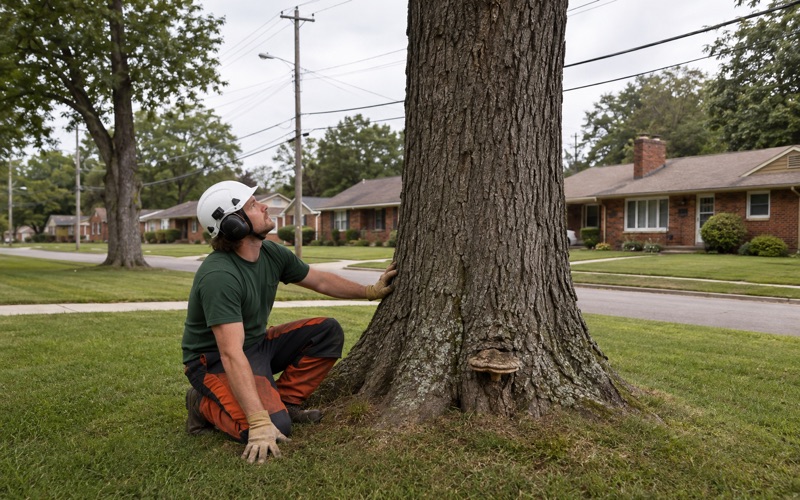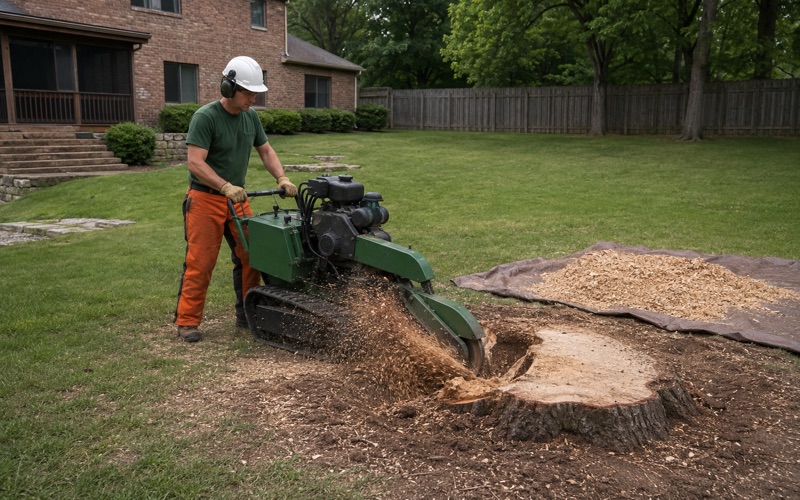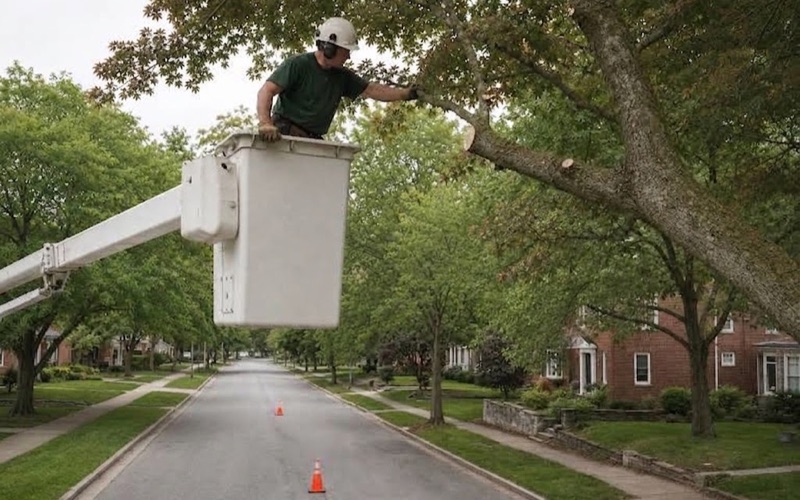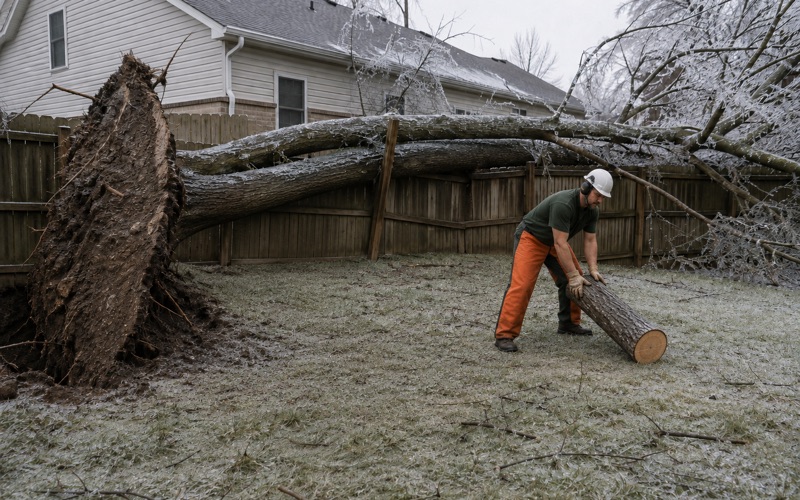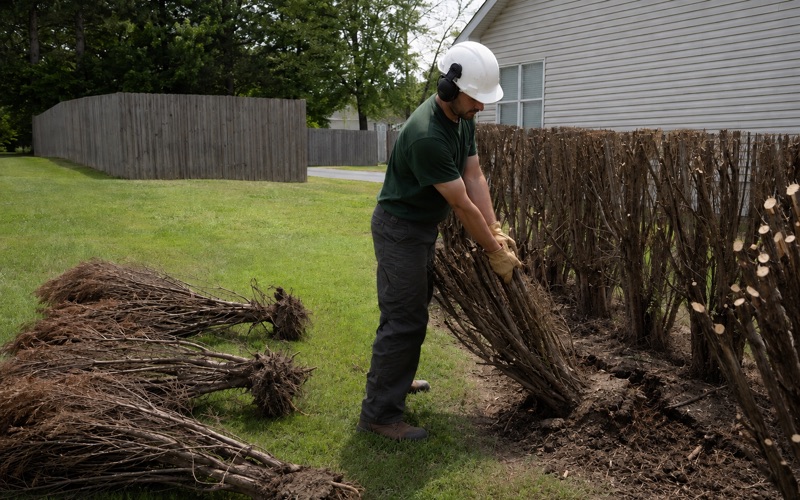
Franklin Tree Removal handles tree removal in Mount Juliet, and we have been doing this work across Middle Tennessee for more than twenty years. That span covers both sides of the metro, the limestone ground on the Nashville Basin side and the deeper soils out on the Western Highland Rim, and the difference between them shows up in something as ordinary as how a stump comes out.
Most of what we are called for here is straightforward residential work: a declining tree over a driveway, a leaner left behind by a storm, a pair of co-dominant stems with included bark that finally split apart. We put the whole job in writing before anyone starts cutting, including the stump, the trunk rounds, the grindings and the chips.
Two things make a quote in this city read differently from one written a county away, and both belong in the conversation before a crew arrives. One is what happens to the debris. The other is what the grinder finds waiting under the lawn.
What Happens to the Debris Once the Tree Is Down
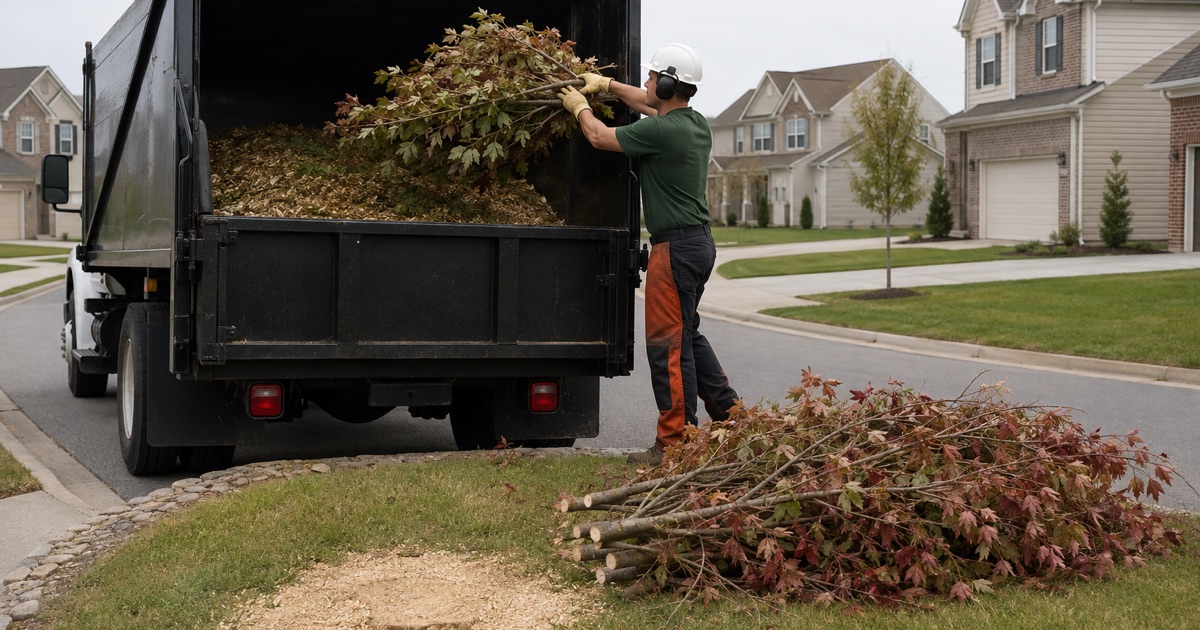
The city runs a brush and chipper collection through eight zones, and for a homeowner dragging their own storm limbs to the curb it is a genuinely useful service. It is not available to a tree service. The published rules state that debris which is the byproduct of commercial cutting or trimming will not be accepted, and the same list rules out whole trees, root balls, lot clearing debris and anything intertwined with plastics, metal or wire.
Why haul-off is a priced line, not an add-on
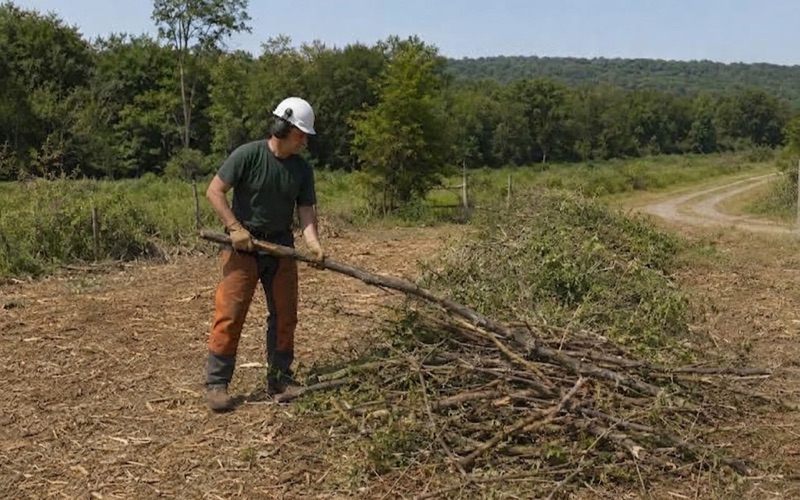
That one exclusion changes how a removal is priced here. Everything our saws produce leaves the property on our own trucks, so the cost of moving it sits inside the number we quote rather than parked on a municipal route. We would rather say that at the estimate than have a customer watch the chipper truck pass by a pile it was never going to take.
The homeowner side of the service has limits of its own worth knowing, because they mark the point where a cleanup stops being a weekend project. Public Works asks for limbs no larger than 10 inches across and branches under 15 feet long, placed within 10 feet of the public roadway rather than in a median or on a sidewalk. Routes take roughly six weeks through the April to October growing season and under one week from November through March, and collection pauses for rain, snow or a significant storm.
What our estimate names before we start
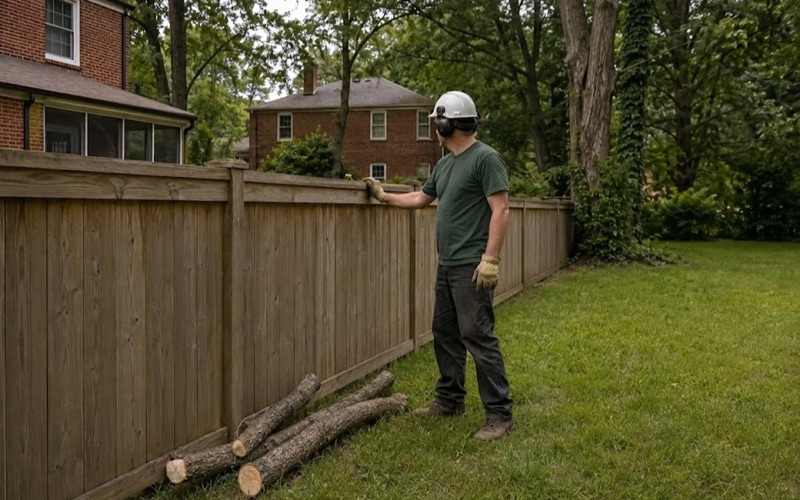
We write down what is included and what is not: the stump, the rounds, the grindings, the chips, and whether any of it stays behind. Tennessee ended its emerald ash borer, pine beetle and thousand cankers rules back in 2021, so leaving trunk rounds on site for firewood is a homeowner preference here rather than a compliance question. Written tree condition reports come out of the same habit, and ours are meant to be handed to a neighbor, an insurer or a city reviewer without translation.
Looking for tree removal closer to Brentwood? See Tree Removal in Brentwood.
Spotted Lanternfly in Wilson County
Spotted lanternfly was confirmed in Wilson County in 2023, and it has quickly become the pest we are asked about most on estimates. The Tennessee Department of Agriculture tracks it through the Protect TN Forests program, and the state’s own wording about what the insect does is more measured than what tends to circulate locally.
What the state actually says about it
The department’s position is that spotted lanternfly may not directly kill trees, but that it can stress a tree and make it more susceptible to other issues. The visible trouble is mess rather than mortality: honeydew can coat areas underneath infested plants with a sticky substrate, and sooty mold frequently grows on that coating, which is an additional nuisance in a residential yard. Egg masses are often tan-colored and look like spattered mud, which is exactly why they get overlooked on trunk bark and on the underside of anything stored outdoors.
Tree of heaven and host-plant control
The legitimate tree-service response is host-plant removal. Tree of heaven, Ailanthus altissima, is the preferred host, so taking one out of a yard removes the thing the insect is drawn to, even though it can feed on over 70 plant species. Tree of heaven also resprouts hard from its root system, so a cut that ignores the roots buys a season of suckers instead of a result.
We will also say plainly when an insect finding is not a reason to remove anything. A stressed tree with a sound stem and a clean root flare is usually a pruning and monitoring case, and telling a customer that costs us a removal we did not need to sell.
Egg mass scraping and monitoring are seasonal work rather than emergency work, so a lanternfly call rarely needs answering the same week. What we do want to look at is any tree that was already declining before the insect turned up, because added stress lands hardest there. Noting where the masses were found this season also makes the next inspection considerably faster.
Three to Twelve Inches of Soil Over Bedrock
The ground under a lot of this area is thin. The Gladeville series, the classic cedar glade soil of this limestone country, is described by the USDA as a very shallow, well drained, flaggy soil where depth to bedrock ranges from about 3 to 12 inches, formed in residuum weathered from thin-bedded flaggy limestone with numerous rock outcrops. Where the soil runs deeper the associated Talbott series gives 20 to 40 inches of solum and depth to bedrock, which is still shallow by the standards of most of the country.
When the grinder stops short of its rated depth
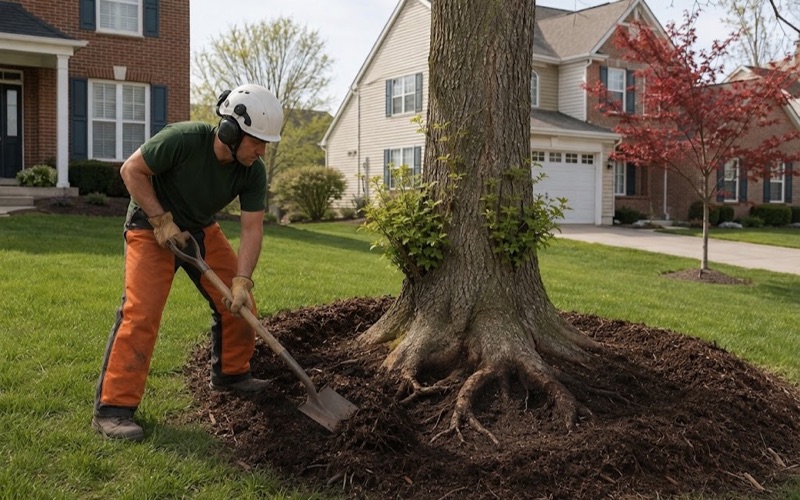
A tracked stump grinder rated to cut 12 to 16 inches below grade is sitting on rock before it reaches that depth on a glade soil. That is the most consequential ground fact for pricing a stump in this city, and it belongs in the conversation before the machine is on the trailer rather than after. What we can commit to on shallow ground is a grind taken down to refusal, the hole backfilled with grindings, and a straight description of what is left underneath.
Root plates that spread instead of anchoring
Shallow soil over limestone also explains failures that look inexplicable from the driveway. A root plate with nowhere to go downward spreads laterally across weathered rock, and the tree can come over in wind with no decay in the stem and no conk anywhere at the base. When we run a tree risk assessment here we study the root flare and the ground around it as hard as the crown, and an air spade and a root collar excavation will sometimes settle a question the crown cannot answer.
Limestone cedar glades, where soil is too thin to hold a tree at all, are a real feature of this landscape and occur in Wilson County. Their edges are places where soil depth changes over a few steps, which is why two stumps on one lot can grind out completely differently.
Utility Clearance, Storm Work, and a Young Canopy
Middle Tennessee Electric and the right of way
Middle Tennessee Electric owns the clearance work inside its own right of way, publishes a 20-foot right-of-way width, and maintains a five-foot radius around service lines on its regular pruning cycle. Members may prune outside that right of way provided the debris will not come into contact with electrical equipment, and the utility’s contractors clear to ANSI Z133 safety requirements. Two of its published positions catch customers off guard: it does not use the topping method, also called rounding over or shaping, and it does not place dirt, seed, straw or similar material on a site after grinding a stump.
We hold the same line on our side of the property. Our pruning follows the objectives and cut types the ANSI A300 standard defines, which means crown cleaning, crown raising, crown thinning, deadwooding or a measured crown reduction rather than topping. When a tree is close enough to the conductors that the utility should be handling it, we say so and point you at their vegetation management line rather than taking the work.
Storm work east of Nashville
Middle Tennessee has averaged 18 tornadoes a year over the 1995 to 2025 period, against eight for the western Grand Division and six for the east, and this city has its own dated experience of that. The March 3, 2020 tornado was rated EF3 with maximum winds of 165 mph and a path length of 60.13 miles that reached nearly two-thirds of a mile wide across Davidson, Wilson and Smith counties. It caused extensive tree damage as it crossed town, and three people died in Wilson County.
Ice is the other loading that matters here, and it fails trees along a different path. The January 2026 ice storm brought 0.50 inch or more of ice accretion, a statewide peak near 230,000 customers without power and 444 broken poles, and because ice loads limbs by weight what comes down is crown over a roof rather than a whole root plate. We plan storm response around the ice and straight-line wind this metro actually produces, the June 2019 derecho that crossed every Middle Tennessee county among them, instead of a generic hurricane script.
A canopy arriving at its first removals
Only 1.1 percent of the housing stock here was built before 1960 and 8.9 percent before 1980, with the median construction band falling in the 2000s. The practical effect on tree work is that most of the canopy over these neighborhoods is planted subdivision stock rather than remnant forest, and a fair amount of it has now reached the age where the first real removals start.
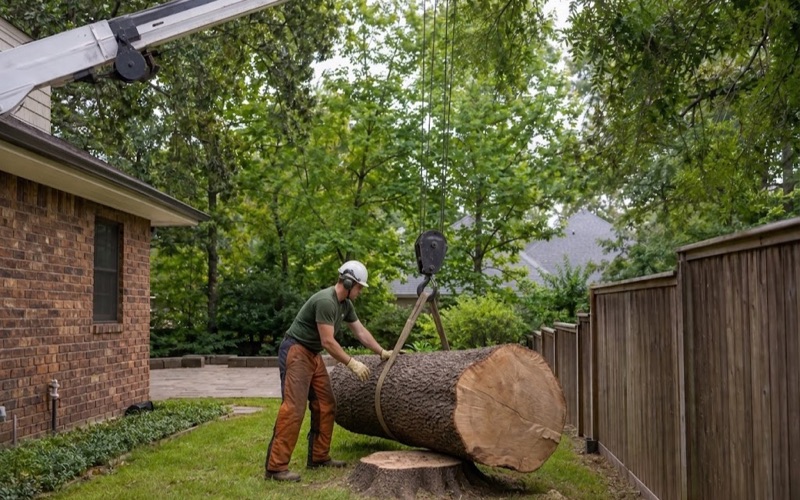
Those first removals tend to be structural rather than terminal: co-dominant stems with included bark on a Callery pear, a Leyland cypress screen that outgrew the spacing it was planted at, a maple set too close to a foundation. Compact tracked equipment that fits through a thirty-five-inch gate keeps most of that work out of the crane category and off the front lawn, and we keep crane and rigging capacity in reserve for the larger trees on older lots. Where a tree can be cabled, braced or pruned instead of taken down, we will tell you that before we quote a removal.
- 20+ Years in Middle Tennessee
- Free Estimates
- Written Scope Before We Start